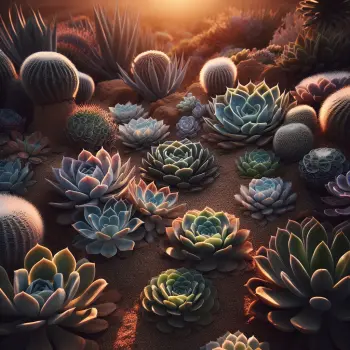
Succulent Gardens: A Comprehensive Guide for Beginners
Welcome to the fascinating world of succulent gardening! If you're a beginner looking for an all-encompassing guide on how to dive into the art of succulent gardening, you're in the right place. In this guide, we'll direct you on how to start your own succulent garden at home. We'll cover beginner-friendly topics, gardening tips, types of succulents, and care instructions.
What Are Succulent Plants?
Succulent plants, or simply succulents, are a type of plant with thickened, fleshy parts that function to retain water in arid climates or soil conditions. They come in an array of shapes, sizes, and colors, and are known for their ease of care.
Why Grow Succulents?
Some reasons why gardening enthusiasts prefer succulents include their low-maintenance nature, variety, adaptability, and aesthetic appeal. Succulents also improve air quality, provide a source of home decor, and may have healing properties. Succulents also grow well in container gardens interspersed among your other plants.
How to Start a Succulent Garden
Starting a succulent garden is not as challenging as it may seem. With the right resources and information, you could have your garden set in no time.
1. Choose Your Succulents
There are thousands of types of succulents, each with its unique needs and characteristics. Some popular choices for beginners include Jade Plants, Echeveria, Zebra Plant, and Aloe Vera. These are relatively easy to look after and grow.
2. Pick the Right Soil
Succulents need well-draining soil to prevent root rot. Choose a cactus mix or create your own by mixing potting soil with coarse sand, pumice, or perlite.
3. Select a Suitable Container
The container needs to have proper drainage holes. You can use pots, tea cups, mason jars, or even create a beautiful succulent garden landscape in a large bowl.
4. Understand Sunlight and Watering Requirements
Succulents need a lot of sunlight but they can get sunburned. A few hours of indirect sunlight a day is usually enough. Regarding watering, less is more. Overwatering is the number one cause of succulent death.
Types of Succulents For Beginners
When you are just starting to build your succulent garden, it could be overwhelming to choose from the thousands of varieties of succulents. Here are some of the best ones for beginners:
- Aloe Vera: Known for its healing properties.
- Jade Plant: Considered a symbol of luck.
- Zebra Plant: Known for the distinctive white stripes on its leaves.
- Echeveria: Popular for their vibrant colors and rosette shape.
Succulent Care Instructions
Ultimately, taking care of succulents involves understanding their needs and mimicking their natural environment as closely as possible.
Watering
Water is essential for the growth and development of succulents, but excessive watering can lead to disease and death. Remember, succulents store water, and also need to dry out between watering.
Light
Target 6 hours of indirect sunlight a day. Some succulents can tolerate full sun, while others may get sunburned.
Soil
Prefer using well-draining soil. A mixture of potting soil, coarse sand, and pumice or perlite can be used.
Troubleshooting Common Problems
1. Overwatering
Signs include yellowing leaves, black stems, and leaves falling off easily. Reduce watering, ensure drainage, and replace soil if it remains wet for long.
2. Underwatering
If leaves are shriveling but not falling off, increase watering slightly.
3. Sunburn
If your succulent's leaves are discolored or crispy, it might be sunburned. Try moving it to a location with less direct sunlight.
In conclusion, starting a succulent garden could be a rewarding experience, and with the right care, your plants can thrive and add beauty to your home for years to come. As a beginner, all you need is curiosity and patience, and you'll soon become a pro succulent gardener. Happy gardening!
Complete List of all Succulent Plants
Succulent plants come in various shapes and sizes, each with its unique characteristics. Here are descriptions of some notable succulent species:
Aloe vera
Aloe vera is renowned for its soothing gel, extracted from its fleshy leaves. It features long, lance-shaped leaves with toothed edges. Aloe vera is prized for its medicinal and cosmetic uses.
Echeveria elegans (Mexican Snowball)
Echeveria elegans, often referred to as Mexican Snowball, forms charming rosettes of pale green, spoon-shaped leaves. It produces bell-shaped pink flowers in the spring.
Sedum spectabile (Showy Stonecrop)
Sedum spectabile, also known as Showy Stonecrop or Butterfly Stonecrop, boasts large clusters of star-shaped flowers in shades of pink, red, or white. Its succulent leaves form a dense mat.
Crassula ovata (Jade Plant)
The Jade Plant is a classic succulent with glossy, oval-shaped leaves that resemble jade gemstones. It's a popular houseplant and is associated with good luck and prosperity.
Haworthia attenuata (Zebra Plant)
Haworthia attenuata, commonly known as Zebra Plant, features striking, dark green leaves adorned with white stripes, resembling zebra stripes. It's a compact and low-maintenance succulent.
Sempervivum tectorum (Common Houseleek)
Sempervivum tectorum, or Common Houseleek, forms tight rosettes of fleshy, pointed leaves. It produces small, star-shaped flowers on tall stalks and is known for its hardiness.
Agave americana (Century Plant)
Agave americana, often called the Century Plant, is a large succulent known for its dramatic rosette of thick, spiky leaves. It can take several years to mature and produce a towering flower stalk before it dies.
Kalanchoe blossfeldiana (Flaming Katy)
Kalanchoe blossfeldiana, also known as Flaming Katy, is a popular flowering succulent. It showcases clusters of small, brightly colored flowers, such as red, pink, orange, or yellow, above its fleshy leaves.
Aeonium arboreum (Black Rose)
Aeonium arboreum, commonly referred to as the Black Rose or Desert Rose, features dark burgundy to black rosettes of leaves. It's a stunning and low-growing succulent.
Senecio rowleyanus (String of Pearls)
Senecio rowleyanus, known as String of Pearls, is characterized by its trailing stems adorned with spherical, bead-like leaves. It's a favorite for hanging baskets.
Lithops (Living Stones)
Lithops, also called Living Stones, are small, rock-like succulents that blend into their arid environments. They have unique leaf structures that mimic stones, helping them avoid predators.
Crassula tetragona (Miniature Pine Tree)
Crassula tetragona, resembling a miniature pine tree, features slender, upright stems with tiny, green leaves arranged in whorls. It's a delightful addition to succulent gardens.
Euphorbia tirucalli (Pencil Cactus)
Euphorbia tirucalli, known as the Pencil Cactus, has cylindrical, green stems that resemble pencils. It's an eye-catching succulent but should be handled with care due to its toxic latex.
Gasteria spp. (Gasteria)
Gasteria species, collectively known as Gasteria, are compact succulents with tongue-shaped leaves. They often feature striking patterns and can thrive in low light conditions.
Haworthia cooperi (Cooper's Haworthia)
Haworthia cooperi, or Cooper's Haworthia, is a charming succulent known for its translucent, jelly-like leaves arranged in a rosette. It has a distinctive window-like appearance.
Sedum morganianum (Burro's Tail)
Sedum morganianum, commonly called Burro's Tail or Donkey Tail, features trailing stems adorned with plump, blue-green, bead-like leaves. It's a popular choice for hanging pots.
Crassula ovata (Jade Plant)
Crassula ovata, known as the Jade Plant, is a classic succulent with fleshy, oval-shaped leaves. It's considered a symbol of good luck and prosperity in some cultures.
Graptopetalum paraguayense (Ghost Plant)
Graptopetalum paraguayense, or Ghost Plant, displays rosettes of pale, silvery-green leaves. It's a versatile succulent that can be grown both indoors and outdoors.
Pachyphytum oviferum (Moonstones)
Pachyphytum oviferum, commonly called Moonstones, resembles a cluster of pale blue-green eggs. Its unique appearance makes it a standout in succulent collections.
Agave victoriae-reginae (Queen Victoria Agave)
Agave victoriae-reginae, also known as Queen Victoria Agave, forms a compact rosette of triangular, dark green leaves adorned with striking white markings.
Crassula perforata (String of Buttons)
Crassula perforata, or String of Buttons, has cylindrical, stacked leaves that resemble a string of buttons. It's a visually appealing succulent suitable for pots and gardens.
Echeveria elegans (Mexican Snowball)
Echeveria elegans, often called Mexican Snowball, forms tight rosettes of pale blue-gray leaves. It's a favorite for its elegant appearance and ease of care.
Adromischus cristatus (Crinkle-Leaf Plant)
Adromischus cristatus, known as the Crinkle-Leaf Plant, features fleshy, crinkled leaves with intricate patterns. It's a captivating succulent that adds texture to arrangements.
Euphorbia obesa (Baseball Plant)
Euphorbia obesa, or Baseball Plant, has a spherical shape resembling a baseball. It's a unique and globular succulent with distinctive rib patterns.
These descriptions provide a glimpse into the diversity of succulent plants, showcasing their unique forms, colors, and characteristics. Keep in mind that there are numerous other captivating succulent sub-species and sub-genus, that it would be impossible to list them all here.